

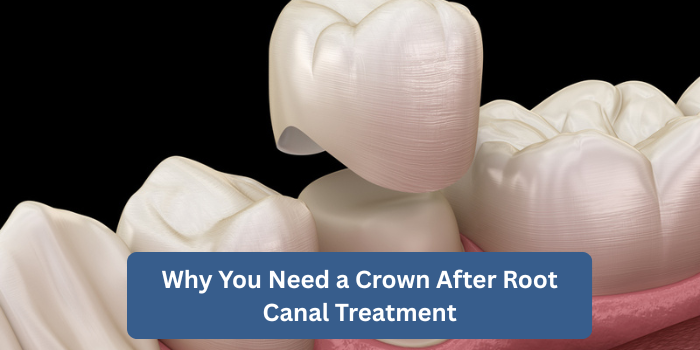
A root canal can save a tooth that would otherwise need to be removed—but the treatment doesn’t end there. Many patients are surprised when their dentist recommends a dental crown after a root canal. If the infection is gone and the pain is relieved, why is a crown still necessary?
The short answer: a root canal saves the inside of the tooth, while a crown protects the outside. Together, they give your tooth the strength, function, and longevity it needs. Below, we’ll explore exactly why you need a crown after root canal treatment and how it helps preserve your smile for years to come.
What Happens to a Tooth After a Root Canal?
During a root canal procedure, the dentist removes infected or damaged pulp from inside the tooth. This pulp contains nerves and blood vessels that keep the tooth alive. Once it’s removed, the tooth is cleaned, disinfected, and sealed.
While this stops pain and infection, it also leaves the tooth more vulnerable. Without its pulp, the tooth no longer receives nourishment, which causes it to become brittle and weaker over time. Think of it like a tree branch that’s hollow on the inside—it may look fine, but it’s much easier to break.
This is where a dental crown becomes essential.
A Crown Restores Strength and Stability
One of the main reasons you need a crown after a root canal is to restore strength. Root canal–treated teeth are significantly more likely to crack or fracture, especially when chewing hard foods.
A crown acts like a protective helmet, covering the entire visible portion of the tooth. It absorbs biting forces and distributes pressure evenly, reducing the risk of cracks or breaks. This is especially important for molars and premolars, which handle most of the chewing.
Without a crown, even normal daily use can cause the tooth to fail.
Prevents Tooth Fracture and Tooth Loss
Studies consistently show that teeth that receive crowns after root canal treatment last much longer than those that don’t. In fact, root canal–treated teeth without crowns are several times more likely to be lost due to fracture.
Once a tooth fractures below the gum line, it often cannot be saved. A crown helps prevent this worst-case scenario by reinforcing the tooth before damage occurs.
In other words, a crown protects your investment in the root canal procedure.
Seals and Protects the Tooth from Re-Infection
Although the inside of the tooth is sealed during a root canal, the outer structure can still develop cracks or wear over time. These tiny openings can allow bacteria to seep back in, potentially causing reinfection.
A dental crown provides an extra layer of defense by sealing the tooth completely. This reduces the risk of bacteria entering the tooth again and helps maintain long-term oral health.
Restores Normal Chewing and Function
After a root canal, many patients unconsciously avoid chewing on the treated tooth, especially if it feels fragile. A crown restores confidence by making the tooth feel solid and natural again.
With a properly fitted crown, you can:
-
Chew normally on both sides of your mouth
-
Enjoy a wider variety of foods
-
Avoid uneven wear on other teeth
Functionally, a crowned tooth behaves much like a healthy natural tooth.
Improves Appearance and Smile Aesthetics
While strength and protection are the primary reasons for a crown, appearance also matters—especially for front teeth.
Root canal–treated teeth can darken over time due to internal changes. A crown covers discoloration and can be color-matched to blend seamlessly with your surrounding teeth. Modern crowns made from porcelain or ceramic look highly natural and enhance your smile rather than detract from it.
Crowns Are Custom-Made for Comfort and Durability
Dental crowns are not one-size-fits-all. They are custom-designed to match your bite, tooth shape, and natural alignment. This ensures comfort, proper function, and long-term durability.
Depending on your needs, crowns can be made from materials such as:
-
Porcelain or ceramic (for natural appearance)
-
Porcelain-fused-to-metal (for strength and aesthetics)
-
Zirconia (for maximum durability)
Your dentist will recommend the best option based on tooth location and biting force.
Is a Crown Always Required After a Root Canal?
In most cases, yes—especially for back teeth. Front teeth may sometimes be restored with a filling if there’s minimal damage, but even then, a crown is often the safest long-term option.
Skipping a crown may save money upfront, but it increases the risk of tooth fracture, reinfection, and eventual extraction—costing more in the long run.
FAQs
1. Is a crown necessary after a root canal?
Yes. A crown protects the weakened tooth and prevents fractures.
2. How soon should I get a crown after a root canal?
Within a few weeks to avoid damage or reinfection.
3. Will the crown procedure be painful?
No. Most patients feel little to no discomfort.
4. How long does a crown last?
Typically 10–15 years with proper care.
5. Can I eat normally with a crown?
Yes. A crown restores normal chewing function.
Conclusion
A root canal saves your tooth from infection, but a crown ensures it stays strong, functional, and protected for the long term. Skipping a crown can leave the tooth vulnerable to cracks, reinfection, and even tooth loss. By completing the treatment with a dental crown, you preserve your smile, restore confident chewing, and avoid future dental complications.
If you’re considering Root Canal Treatment, trust the expertise of Dr. Rohini Lahane at Dr. Rohini’s Kids & Family Dental Care for gentle, advanced, and personalized dental care. Book your consultation today and take the final step toward a healthier, long-lasting smile.
