

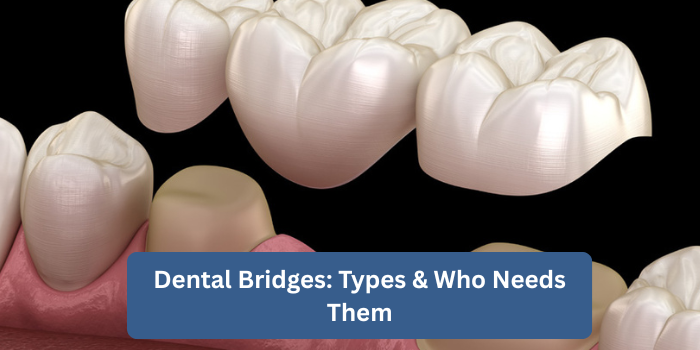
A missing tooth is more than just a gap in your smile; it’s a disruption to the complex harmony of your mouth. When a tooth is lost to decay, injury, or age, the surrounding teeth often begin to shift, your bite changes, and even the shape of your face can subtly alter over time. This is where dental bridges come into play. As a time-tested cornerstone of restorative dentistry, bridges do exactly what their name suggests: they bridge the gap created by one or more missing teeth.
Understanding the nuances of dental bridges is essential for anyone looking to restore their oral health. Whether you are dealing with a recent extraction or have been hiding a gap for years, this guide explores the different types of bridges available and helps identify who stands to benefit most from this procedure.
What Exactly is a Dental Bridge?
At its simplest, a dental bridge is a fixed dental prosthesis used to replace one or more missing teeth by joining an artificial tooth permanently to adjacent teeth or dental implants.
A standard bridge consists of two main components:
-
Abutment Teeth: These are the “anchor” teeth on either side of the gap. They are prepared to hold the bridge in place.
-
Pontics: This is the “filler” tooth (or teeth) that sits in the space where your natural tooth used to be.
Modern bridges are typically crafted from porcelain, zirconia, or a combination of metal and ceramics to ensure they look natural and can withstand the pressure of chewing.
Exploring the Four Main Types of Dental Bridges
Not every mouth is the same, and neither is every gap. Dentists utilize four primary types of bridges depending on the health of the surrounding teeth and the location of the missing tooth.
1. Traditional Dental Bridges
This is the most common variety. A traditional bridge involves creating a crown for the tooth or implant on either side of the missing tooth, with a pontic in between. Because they are held in place by crowns, these bridges are incredibly sturdy. However, the downside is that the dentist must remove a significant amount of enamel from the healthy abutment teeth to accommodate the crowns.
2. Cantilever Bridges
Cantilever bridges are used when there are adjacent teeth on only one side of the missing tooth space. This is less common today and is generally not recommended for the back of the mouth, where it could put too much force on a single anchor tooth and damage it. However, in specific clinical scenarios toward the front of the mouth, it remains a viable option.
3. Maryland Bonded Bridges
If you want to preserve as much of your natural tooth structure as possible, a Maryland bridge might be the answer. Instead of using crowns, this bridge uses a metal or porcelain framework with “wings” that are bonded to the backs of your existing teeth. It’s a more conservative approach, though it isn’t quite as strong as a traditional bridge.
4. Implant-Supported Bridges
The gold standard for replacing multiple missing teeth in a row is the implant-supported bridge. Instead of being supported by natural teeth, this bridge is supported by dental implants. Typically, one implant is placed for every missing tooth, and these implants hold the bridge in position. This is the most stable system and doesn’t require any alteration of your remaining natural teeth.
Who Needs a Dental Bridge?
You might be a candidate for a dental bridge if you have one or more permanent teeth missing and have healthy oral tissues. Here are the primary indicators that it’s time to talk to a professional:
-
Difficulty Chewing: If you find yourself avoiding certain foods or chewing only on one side of your mouth, a bridge can restore full functionality.
-
Speech Impediments: Missing teeth, especially in the front, can cause a lisp or make it difficult to pronounce certain sounds.
-
Shifting Teeth: Teeth like to have “neighbors.” When a gap appears, the teeth on either side will naturally begin to tilt into the empty space, which can lead to orthodontic issues and jaw pain.
-
Facial Structure Concerns: Your teeth help maintain the shape of your face. Long-term tooth loss can lead to bone resorption, which can give the face a “sunken” appearance.
-
Confidence Issues: If you find yourself covering your mouth when you laugh or avoiding photos, a bridge can provide a significant psychological boost.
The Procedure: What to Expect
Getting a bridge usually requires two appointments. During the first visit, the abutment teeth are prepared. The dentist recontours these teeth by removing a portion of enamel to allow room for a crown. Then, impressions of your teeth are made, which serve as a model from which the bridge, pontic, and crowns will be crafted by a dental lab. Your dentist will provide a temporary bridge to wear while your permanent one is being made.
At the second visit, your temporary bridge is removed, and the new permanent bridge is checked and adjusted to achieve a proper fit. Once the fit is perfect, it is cemented into place.
Maintenance and Longevity
With proper care, a dental bridge can last anywhere from 10 to 15 years, and sometimes longer. The key to longevity is oral hygiene. Because the bridge relies on the health of the surrounding teeth, you must be diligent about brushing twice a day and using specialized floss (like a floss threader) to clean underneath the pontic.
Regular dental checkups are also non-negotiable. Your dentist can spot early signs of decay or bridge wear before they become painful or expensive problems.
Choosing the right dental bridge is a vital step toward reclaiming your oral health and confidence. By filling those gaps, you aren’t just improving your appearance; you are protecting your remaining teeth from shifting and ensuring your bite remains functional for years to come. Whether you opt for a traditional bridge or an implant-supported solution, the result is a stronger, more complete smile.
Don’t let missing teeth hold you back any longer. If you’re ready to explore your options, schedule a consultation with Dr. Rohini Lahane at Dr. Rohini’s Kids & Family Dental Care. Our team is dedicated to providing personalized, gentle care to help your entire family achieve healthy, beautiful smiles. Call us today to book your appointment!
Frequently Asked Questions
1. How long does a dental bridge typically last?
With proper oral hygiene and regular professional cleanings, a dental bridge can last between 10 to 15 years. The lifespan depends heavily on the health of the underlying anchor teeth and the gums.
2. Does the procedure for getting a bridge hurt?
The procedure is generally painless. Your dentist will use a local anesthetic to numb the area while the anchor teeth are prepared. You may experience minor sensitivity or gum soreness for a few days after the final fitting, which is easily managed with over-the-counter relief.
3. Can a dental bridge be whitened like natural teeth?
No. The materials used in bridges—such as porcelain or zirconia—are resistant to whitening gels. If you want a brighter smile, it is recommended to whiten your natural teeth before the bridge is made so the lab can match the bridge to your new, lighter shade.
4. Is it difficult to eat with a dental bridge?
Initially, you may need to eat softer foods as you adjust, but once the bridge is settled, it actually makes eating much easier. It restores your ability to chew properly on both sides of your mouth. However, you should avoid biting down on very hard objects like ice or hard candy.
5. How do I clean under the bridge?
Since the artificial tooth (pontic) sits above the gum line, food can sometimes get trapped. You will need to use a floss threader or an interdental brush to clean the space between the bridge and the gums to prevent decay on the anchor teeth.
